
Description
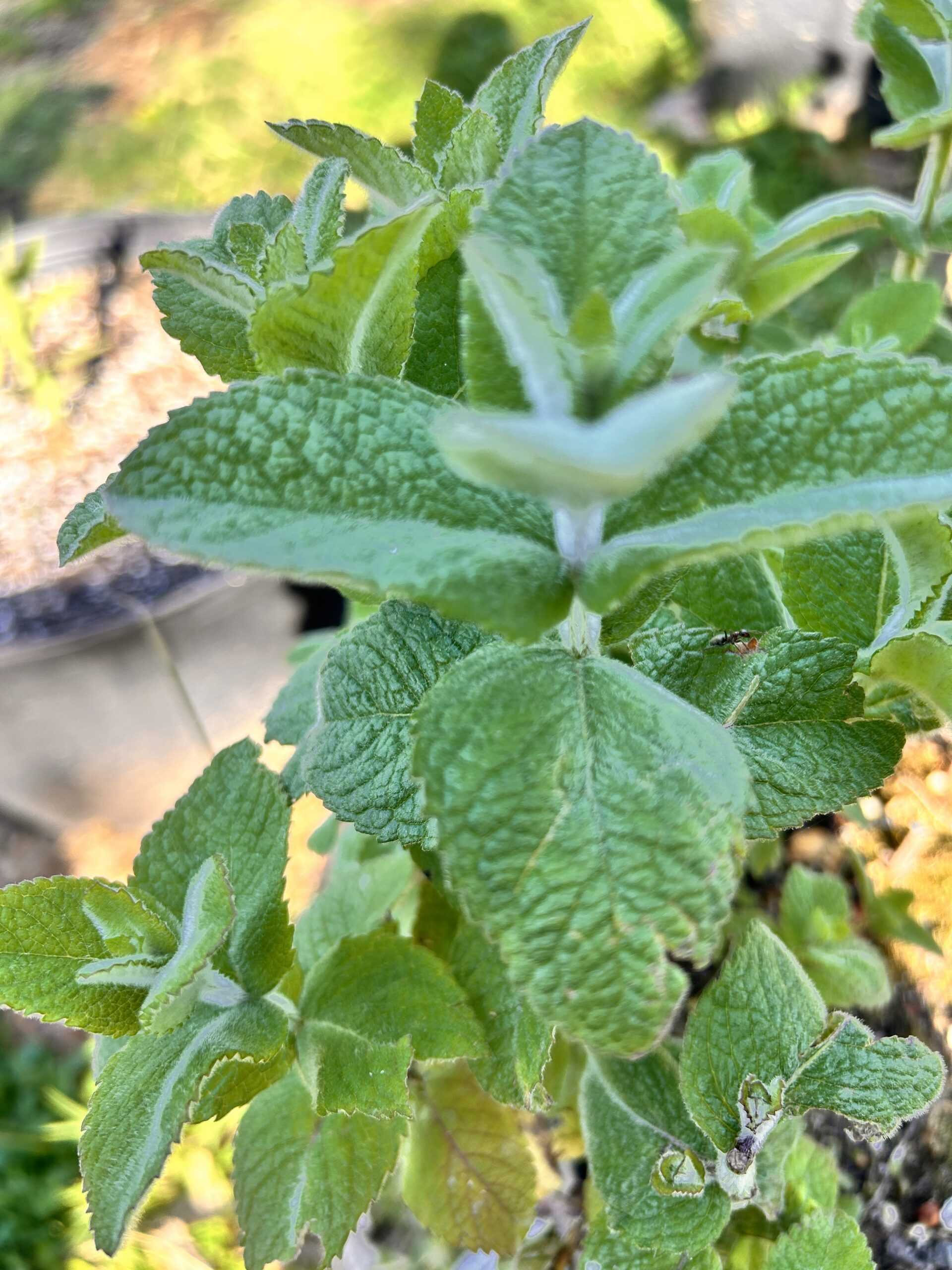
A member of the Lamiaceae or Labiatae family, Persian mint is a perennial herb grown for its aromatic leaves. It forms a low, spreading plant with soft green, slightly fuzzy leaves that are oval to lance-shaped with gently serrated edges. The square stems, typical of mints, may take on a faint purplish tint. In summer, it produces small, pale lavender to light pink flowers arranged in delicate whorls along the upper stems. It is also grown in gardens as a groundcover and for its ability to attract birds, bees, butterflies and hummingbirds.
A variety of Moroccan mint, this herb grows to about 18″ tall and has a subtle flavor and aroma, making it well suited for fresh use or dishes that call for a lighter mint presence. It does best with afternoon shade and regular water.
The Greek philosopher and botanist Theophrastus named the Mentha genus from a story in Greek mythology. It was said that the nymph Menthe was so adored by Pluto that Proserpine became jealous and had her turned into the plant we know as mint.
A relatively recent introduction, Persian mint was named by researchers at Rutgers University during a study on the anti-inflammatory properties of mint and oregano. The plant came to Rutgers via Michigan State University, which had received it from foragers in San Francisco who observed it being grown and used by the Persian community there. Like other mints, it spreads readily and is best contained in above-ground pots or submerged barriers. Very hardy perennial, Zones 3–8.


