
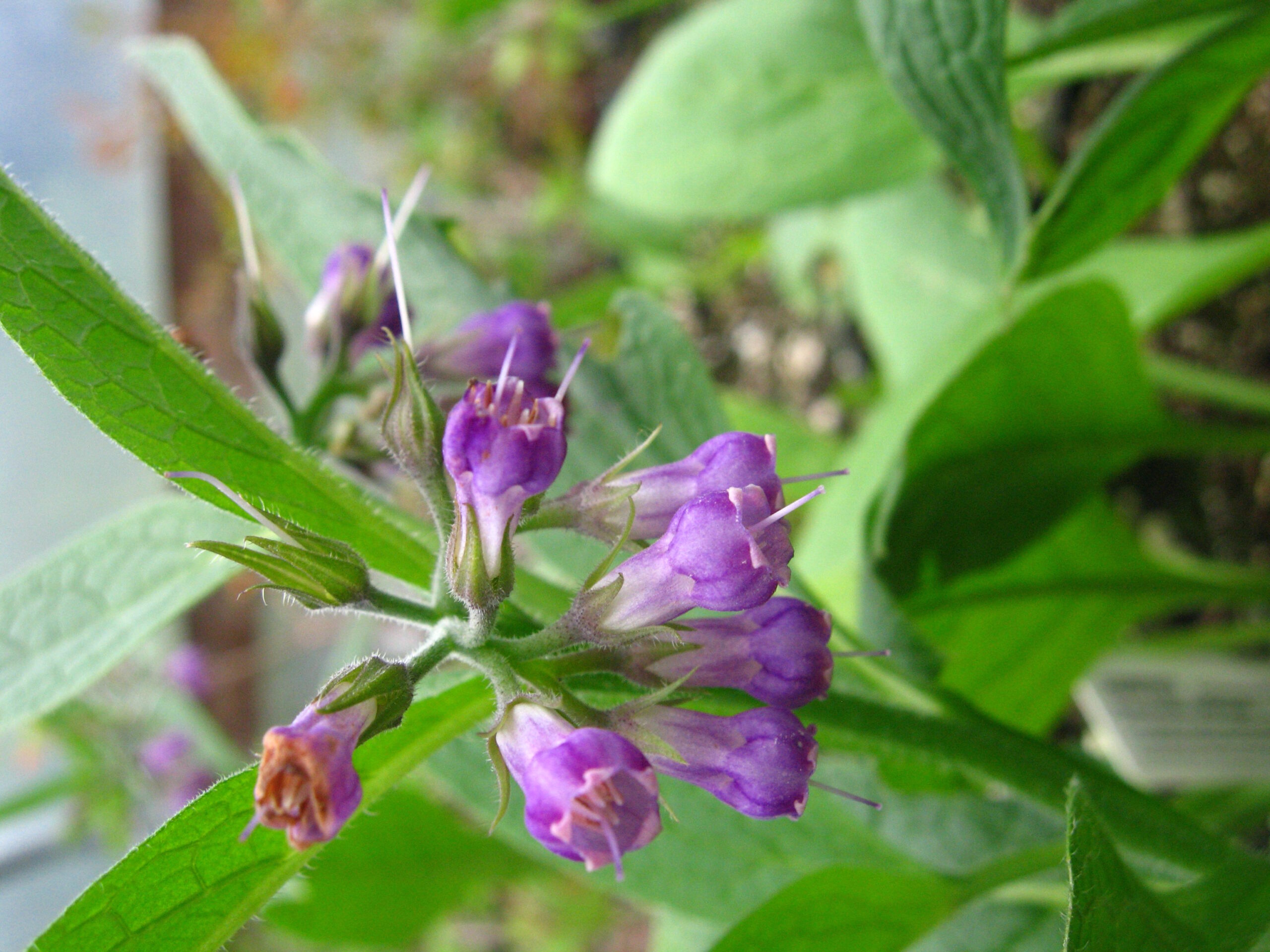
Description
True comfrey, known botanically as Symphytum officinale, is a perennial herb with a long record of human use. Native to Europe and western Asia, it has grown for centuries in damp meadows, along stream banks, and at the edges of cultivated land. Its steady presence in monastic physic gardens and rural household plots reflects its role as a plant kept close for regular use rather than gathered only on occasion.
The name Symphytum comes from a Greek root meaning “to grow together,” a reference to the plant’s traditional association with the healing of wounds, ulcers, and broken bones. For centuries, teas and poultices prepared from the leaves or roots were applied externally in European folk medicine, particularly for injuries involving torn or damaged tissue. Modern science confirms that comfrey is rich in mucilage and contains allantoin, a naturally occurring compound that supports cell division and tissue repair. These qualities shaped its reputation as a plant brings things back together, and common names such as knitbone and boneset reflect this long-held understanding.
This variety is the original medicinal comfrey, distinguished from later sterile hybrids by its ability to produce viable seed and by the quality of its roots and leaves. These traits made it suitable for both household medicine and long-term cultivation, allowing it to be saved, replanted, and passed down through generations. As European settlers carried familiar plants with them, true comfrey became established in North America, where it readily naturalized in environments similar to its native range.
In the garden, true comfrey has long been valued as a dependable perennial with a deep taproot that draws nutrients from well below the soil surface. Its broad leaves accumulate these minerals and have traditionally been cut and returned to the soil as mulch or compost material. Once established, the plant forms a stable crown and does not respond well to disturbance, encouraging thoughtful placement from the outset.
True comfrey prefers moist, fertile soil with good drainage and grows well in full sun or partial shade. Deep, fertile loam is ideal, particularly soil that has been built over time with organic matter, though the plant will tolerate clay or sandy soils if moisture is consistent. Because of its long taproot, comfrey benefits from depth more than texture, and shallow or compacted soils tend to limit its growth. A slightly acidic to neutral pH is well-suited to the plant. If fertility appears low, a light annual top-dressing of compost in early spring is sufficient. High-nitrogen fertilizers are unnecessary and can encourage excessive leaf growth at the expense of root development. In long-cultivated gardens, comfrey often thrives without added inputs beyond occasional organic matter. The plant can be cut back during the growing season and will regrow from the crown.
True comfrey is a hardy perennial suited to USDA hardiness zones 3 through 9. In colder climates, it dies back completely in winter and reemerges in spring, while in milder regions, it may retain some foliage year-round.


Reviews
There are no reviews yet.